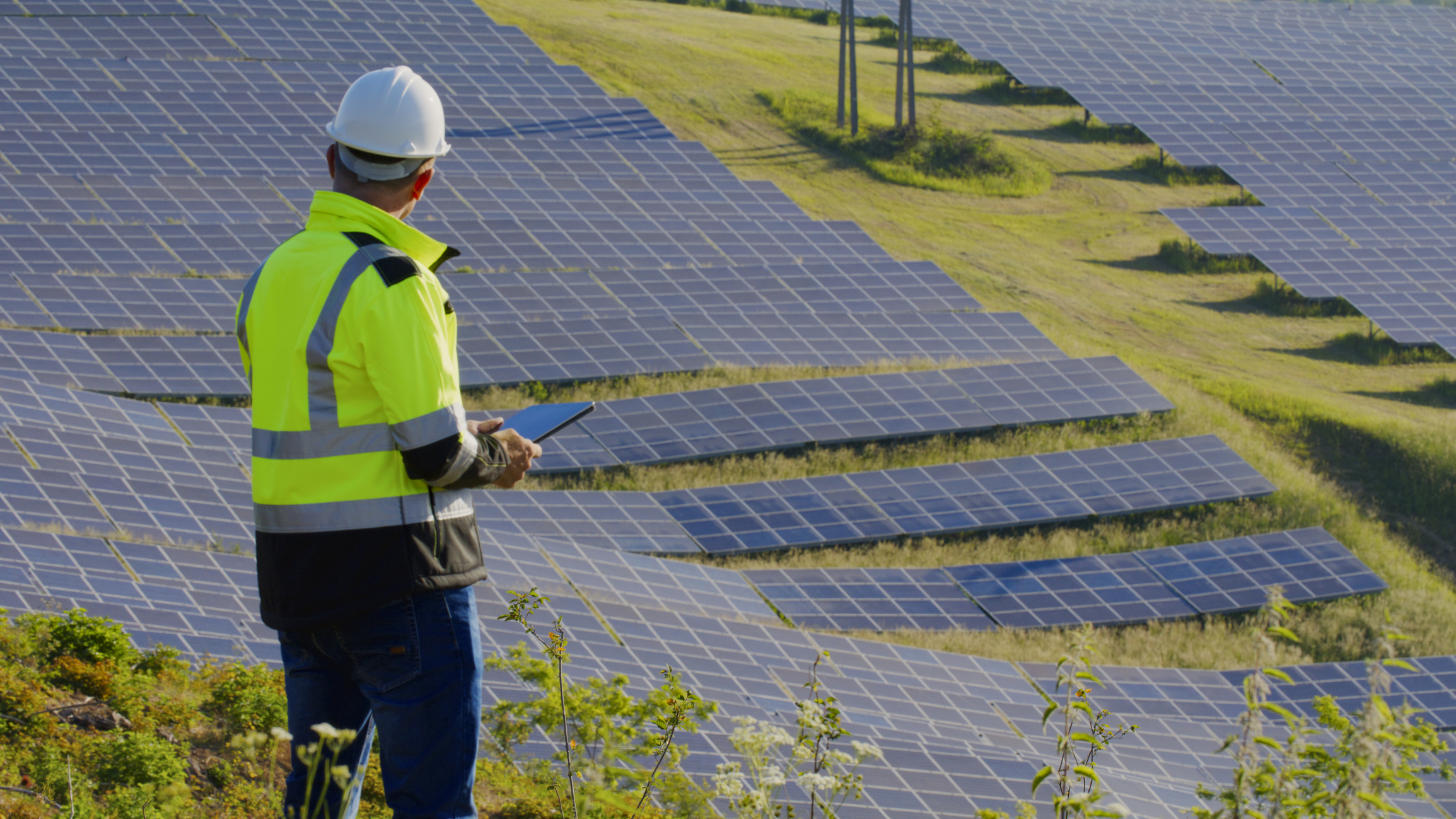
Field operations managers often struggle with hundreds to thousands of unorganized photos and missed defects. These usually lead to expensive return trips and fragmented documentation.
Artificial intelligence and AI image-based inspections solve this by using software to automatically:
- Organize data the moment a technician snaps a picture
- “Read” photos and interpret what they show
- And identify issues before leaving the site
This guide explains how these digital tools simplify your workflow, improve accuracy, and help field service teams get jobs done faster.
Highlights
- Automated Accuracy: Computer vision identifies defects like cracked solar panels or property damage instantly, reducing human error.
- Faster Turnarounds: Real-time processing eliminates the need for back-office teams to manually sort thousands of images.
- Cost Reduction: Improved visual verification reduces “truck rolls” by ensuring the job is done right the first time.
- Reliable Documentation: AI-powered metadata integration creates a foolproof audit trail with GPS and timestamps.
The Basics of AI Image-Based Inspections
Before diving into the benefits and how these AI tools are transforming field ops, it’s important to understand the technical gears that enable AI-powered inspections. These tools rely on a combination of visual processing and data organization to turn a standard smartphone photo into a high-value data point.
Computer Vision Technology
Computer vision is a set of technologies that automatically extracts meaningful, contextual information from real-world images and videos. In simple terms, it’s the core “engine” that allows computers to understand the visual world. It converts raw pixel data from field photos and videos into structured data.
This technology acts as a digital eye that never gets tired or misses a detail. It involves image acquisition from various inputs, such as:
- High-end DSLRs like a Canon EOS 1300D
- Standard mobile phones
- Web cameras
- IoT devices
- And more
These inputs are processed in different ways. However, AI-powered processing is driving today’s computer vision market (source: The Business Research Company).
AI enables computer vision systems to extract useful information from images and convert it into text in a report or alerts for field teams.
For example, computer vision enables computers to automatically:
- Perform visual defect detection on a cracked solar panel
- Identify and read a serial number on an inverter
- Detect a stain on a rental’s new carpet
Image Recognition Vs. Object Detection
Computer vision covers a wide range of technologies with different functions. But in the case of field ops inspections, two functions are particularly useful:
- Image recognition
- Object detection
While often used interchangeably, these two functions perform different roles during an inspection. Understanding the difference helps you set up better inspection workflow protocols for your field teams.
The table below explains the difference.
Feature | Image Recognition | Object Detection |
Primary Function | Identifies the type of image as a whole | Locates specific items or defects within an image |
Main Purpose | To categorize photos for organization (e.g., placing them in the correct folder) | To identify specific problems for teams to fix |
Example | Confirming “This is a photo of a solar inverter.” | Drawing a box around a loose wire at specific coordinates |
Take this image as an example:

Image recognition will automatically classify this photo as a thermographic image of a solar array. It might tag it as such and possibly move it to the right folder within a specific project.
Object detection, on the other hand, would look at this image and identify a hot spot in one of the panels. It might also:
- Identify the specific type and model of the affected solar panel
- Pinpoint its exact location within the solar array
- Automatically alert the field ops manager
The Power of Machine Learning (ML)
However powerful, AI systems don’t always know what to look for in an image. If you want a system that can detect, flag, and annotate hotspots on an image of a solar panel like the one above, engineers need to train it.
Training AI is usually done through machine learning (ML).
ML allows inspection systems to get smarter over time by looking at thousands of “ground truth” images from previous inspections. The more high-quality data the AI processes, the more accurate it becomes at flagging anomalies and verifying compliance.
Under the hood, many of these systems rely on something called Convolutional Neural Networks (CNNs). You don’t need to understand how CNN models work. All you need to know is that they mimic the human brain to make complex decisions.
To ensure high inspection accuracy, engineers test their AI models after training by running them through a set of known images (a validation set). They check if the AI accurately identifies known defects or objects, or if it gets it wrong (validation loss).
Real-Time Data Processing
Modern AI tools analyze images in seconds, often while the technician is still standing on the jobsite. This speed creates immediate feedback loops that significantly improve the quality of data collected in the field.
Thanks to this real-time data processing, technicians get instant alerts if:
- A critical component is missing from the frame
- A new panel installation is non-compliant
- An image is too blurry
This uses principles of the Internet of Things (IoT) and modern sensor technology to prevent return trips. Whether the processing happens via cloud streaming to Google Cloud or locally on a device like a Raspberry Pi, the goal is the same: ensure data integrity before the worker leaves the site.
Metadata Integration
Visual AI is most powerful when combined with “hidden” data like GPS coordinates and timestamps. This ensures that every AI-verified inspection is tied to the exact location and time the work was performed.
This integration creates an unshakeable audit trail for:
- Client billing
- Insurance
- Financing
By capturing the IP address and location of every upload, the system makes classification and sorting effortless. Managers can quickly search their web-based dashboards via a client portal to find specific jobs based on time or location.
The Pros and Cons of AI Image-Based Inspections in Field Operations
Adopting new technology always involves a trade-off between immediate benefits and the effort required for implementation. Whether you run a Smart Quality Inspection program or a simple checklist, you must weigh the ROI.
Below is a summary of the advantages and challenges you should consider when moving to an AI inspection system or similar digital tools.
Category | Pros (Advantages) | Cons (Challenges) |
Efficiency | Faster data sorting with a boost in labor efficiency | Requires initial setup and integration |
Bottom Line | Reduces the cost of unnecessary truck rolls and increases revenue per employee | Comes with subscription or software licensing fees |
Quality | Eliminates human error in visual defect detection | Depends on high-quality initial photo capture |
Security | Automated, timestamped audit trails | Data privacy and cloud security concerns |
Pros
The primary benefit of AI image-based inspections is the drastic reduction in manual review time and human error. AI-driven automation can increase labor productivity and deliver 3x higher growth in revenue per employee (source: PwC). AI visual inspection tools also:
- Help optimize resources by letting software handle the tedious task of photo sorting and classification task execution
- Provide better inspection reports for long-term asset management systems through advanced analytics
- Reduce the risk of missed defects, which improves overall safety and adherence to quality standards
- Identify small issues before they become expensive, large-scale failures
Cons
Despite the benefits, companies must navigate the complexities of data privacy and security when uploading sensitive site images. Ensuring that your AI tools are secure is critical for protecting both your company and your clients.
Other challenges include:
- Initial costs for high-resolution cameras or specialized sensors may be higher than traditional tools, and you may need to pay software subscription fees
- The system requires a reliable internet connection or specialized Edge AI capabilities for remote areas where cloud streaming might be weak
- While no-code tools are simpler, a quality engineer or field staff may still require a period of continuous learning
- Long integration times to connect new AI tools with existing software and infrastructure
How AI Tools are Transforming Various Field Operations (+ the SiteCapture Advantage)
AI technology is being applied to solve specific problems across different sectors, from manufacturing businesses to solar installations and real estate. By leveraging SiteCapture’s structured platform, companies can maximize these AI capabilities and get the most value from every photo.
Automated Quality Control (QC)
The transformation in QC means that AI algorithms now “view” photos in real-time to detect common installation errors. Automated visual inspections are now essential for:
- Maintaining high standards in complex environments, from large-scale PV arrays to a manufacturing environment
- Distinguishing a defective product on a production line
- Verifying that an electrical panel was correctly installed
- And more
SiteCapture’s standardized templates provide high-quality data that enables AI models to accurately identify “pass/fail” criteria instantly.
Required inspection points ensure that technicians capture exactly what the AI needs to verify a job. This eliminates the bottleneck of manual reviews, which allows you to scale operations without hiring additional staff.
Intelligent Photo Labeling and Sorting
As stated earlier, computer vision can automatically categorize thousands of field images. Without human input, they can distinguish between:
- A circuit breaker
- A roof mount
- An inverter
This removes the manual labor traditionally required to keep project folders organized.
By utilizing SiteCapture’s automated tagging and metadata capture, AI tools can instantly sync field evidence to the correct property container. This makes photo and jobsite documentation management effortless for the entire team. Managers no longer have to spend hours searching through mobile phones or generic “IMG_1234” files to find proof of work.
Streamlining “Self-Inspections”
AI helps bridge the gap for non-experts, such as homeowners or tenants, by guiding them through the photo-taking process. This ensures they capture the correct angles and details needed for a remote professional audit.

Combining SiteCapture’s Self-Surveys with AI-driven validation confirms that photos meet professional standards before the data is even submitted. This reduces the number of follow-up requests and “failed” surveys.
Predictive Maintenance and Anomaly Detection
AI can analyze historical inspection photos to identify subtle patterns and anomalies, such as:
- Early signs of water damage in property management
- Hairline cracks in solar panels
- Surface defect detection
Localized visual defect detection catches issues while they’re still cheap to fix. Combining SiteCapture’s timestamped photos with AI-based processing allows managers to move from “break-fix” models to AI-enhanced predictive maintenance. According to McKinsey research, these models can:
- Reduce maintenance labor costs by a third
- Cut unscheduled downtime by up to 90%
- Increase technician capacity by 40%
This approach extends the equipment’s lifespan and increases the property owner’s return on investment.
Reducing “Truck Rolls” Through Visual Verification
Unnecessary truck rolls are a major drain on profits. We conducted a 2025 survey with Solar Power World and found that the average cost per additional truck roll to collect missing photos was $475 (source: Solar Power World).
AI-powered visual analysis allows teams to automatically verify they have all the photos they need before leaving the site. This effectively eliminates the need for that second visit. This means your crews spend more time installing new systems and less time driving back to old ones to take a single missed photo.
Future Trends in AI Image-Based Inspections
Field operations are moving toward a more autonomous future where human intervention is minimized. McKinsey’s 2025 State of AI report notes that 88% of organizations now use AI in at least one business function, with 62% either experimenting with or scaling Agentic AI systems.
Consequently, we’re seeing the rise of agentic tasks in which a ReAct Agent (Reasoning and Acting) can not only identify a defect but also automatically trigger a work order to schedule a repair.
Other innovations include drone-based image capture and the use of inspection robots with real-time processing.

Advancements in multi-modal understanding will soon allow AI to move beyond image-based inspections. It’ll be able to craft comprehensive reports combining:
- Sensor data
- Voice notes
- Images
Finally, as regulatory requirements evolve, companies will rely on these tools to automatically search for type-approved products and ensure compliance.
Conclusion
AI image-based inspections have evolved to become a critical component of profitable field operations. By automating the most tedious parts of the inspection process, like sorting photos and detecting defects, you allow your team to focus on high-value work.
Embracing these AI tools today will not only save your company thousands in wasted truck rolls; it’ll also provide a level of inspection accuracy at scale that manual inspections simply can’t match. Combined with a tool like SiteCapture, AI-powered image-based inspections will give you the edge you need over your competitors.
Schedule a demo or start your free SiteCapture trial today to make every truck roll count.