If you’re in the construction business, there’s a high chance you’ve had to deal with delays for most projects.
In fact, only 8.5% of construction projects meet time and budget expectations according to Oxford University professor, Bent Flyvbjerg, in his book, How Big Things Get Done.
The question is, how do you solve this issue?
It comes down to planning, execution, and control. That’s where construction daily reports come in.
Overview of construction daily reports
A construction daily report is a quality control report that documents your construction project’s progress. It’s a formal record detailing the crucial events and observations from a construction site for a specific day.
You can see if your project is on schedule, and if you expect delays, you can try to avoid them before they become too serious.
While the specific format might vary depending on the construction company or project requirements, certain common elements are fundamental to creating a comprehensive report.
Essential elements of a comprehensive construction daily report
A well-structured report provides a clear picture of the project’s status and serves as a critical future reference. It ensures all project stakeholders, from field teams to clients and management, receive reliable, current information.
To create an effective daily construction site diary, consider adding these types of information:
Foundational Information: Project Details & Conditions
Every report must start with the basic project information:
- Project Name
- Project Number
- Report Date
- Report Author
- Site Location
Equally important is documenting the day’s weather conditions. This isn’t about noting if it’s sunny or partly cloudy; include details like:
- Precipitation amounts
- Temperature ranges
- Wind speed
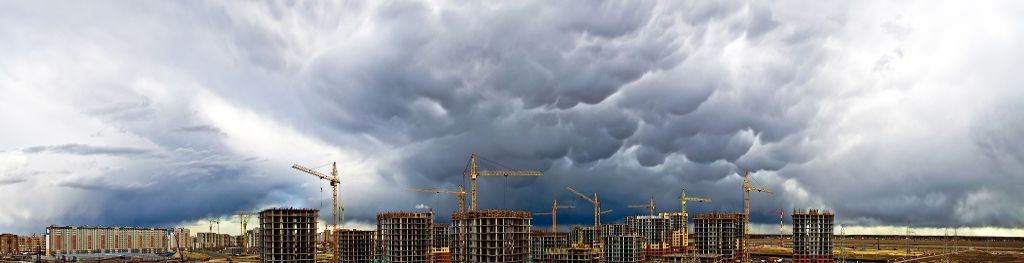
It’s also critical to note how these conditions impacted site work or safety (i.e., the impact of weather). For example, noting high winds might explain why crane operations were halted, or heavy rain could justify delays in groundwork. Accurate weather reporting provides essential context.
Pro-tip on weather reports
We suggest documenting the weather by adding pictures and video reports of harsh conditions like snow or rain. This will help verify why no construction work was done that day.
Labor tracking
Knowing who was on site and what they were doing is crucial for job costing, progress tracking, and managing labor productivity. A construction daily report should list all personnel present, including internal construction teams and subcontractors (clearly identifying companies).
Record the number of workers for each team and the specific labor hours spent on particular tasks. This detailed tracking helps ensure accurate labor records for payroll and provides insights into workforce efficiency.
Having this data readily available can also be helpful information for the labor board if you ever need it.
Activities and task progress
Project information is the most essential part of a construction report. It basically reviews the progress of various departments, such as roofing, walling, foundation, and plumbing.
This section details the actual construction activities your teams performed.
When reporting task progress, be specific. Instead of “worked on roof,” use details like:
- Installed 32 solar panels on Array B, South Roof
- Completed concrete pour for foundation section 4
Crucially, compare the real progress against the planned construction schedule. Identifying deviations early allows for timely adjustments. Embedding progress photos here provides indisputable visual evidence of the work completed and site conditions, creating a powerful record of progress.
Resource management: Materials and equipment used
Effective project management requires careful resource and materials tracking. That means recording all the materials, equipment, and tools you’re using in case there’s a dispute after the project is complete.

Log all materials delivered to the site, including:
- Storage location
- Quantity
- Supplier
- Type
Tracking equipment usage is important because it generates hourly costs that require careful time management.
List each significant piece of equipment or heavy machinery used (e.g., excavator, crane, forklift). Note its ID, hours operated, hours idle, and the operational status of the equipment.
Immediately documenting any equipment malfunctions is vital for scheduling repairs and explaining potential delays.
Site access: Visitor log
Keep a record of anyone visiting the site who isn’t part of the regular crew or subcontractors. This list of visitors should include inspectors, clients, architects, engineers, delivery personnel, etc.
Note their name, company affiliation, purpose of visit, and time in/out. This log is helpful for security, contact tracing if needed, and documenting key interactions.
Observations, incidents, and protocols
Safety is non-negotiable. This section of the construction daily report is critical for documenting due diligence and fostering a safe working environment.
Record details of every safety meeting you or your team holds. Also, record safety observations (both positive practices and hazards identified), adherence to safety protocols, and the use of specific safety checklists.
It’s critical to document any safety incidents, near misses, identified safety concerns, or safety risks thoroughly. You should also note the corrective actions you took to mitigate those risks.
This safety documentation is essential for compliance, managing potential risks, providing assurance on construction sites, and supporting ongoing safety programs. Input from safety professionals can be invaluable here. Documenting special safety training conducted is also wise.
Identifying roadblocks: Delays, issues, and obstacles
Transparency about challenges is key to a successful, on-time project. Document anything that impeded progress:
- Unexpected site conditions (e.g., discovering unforeseen utilities)
- Design discrepancies
- Subcontractor issues
- Material shortages
- Access problems
- Late deliveries
- Quality issues
Describe the issue clearly, state its cause and impact on the schedule or budget, and outline the steps being taken for resolution. This information is crucial to manage client expectations and justify potential change orders or schedule adjustments. It also helps to avoid disputes between contractors.
Supporting details: Notes and visual documentation
Projects can be complex, and it’s not always possible to cover everything in a checklist. Include a section for quick notes covering any other relevant information not captured elsewhere (e.g., specific instructions received, on-site decisions, etc.).
Most importantly, consistently attach timestamped and annotated photographs and videos.
Tools like SiteCapture offer advanced project reporting capabilities that let you attach, annotate, and organize photos in every report.

With SiteCapture as your field operations management software, your crew can share those pictures and reports with all relevant stakeholders. This instant access maximizes communication efficiency and boosts your brand reputation.
Visuals provide context and objective evidence that text alone cannot.
Progress photos and images of issues offer a clearer picture, significantly enhancing the report’s value for future reference.
Impact of construction daily reports on project management
Consistent and accurate reporting via construction daily reports delivers tangible benefits that significantly enhance overall project management effectiveness. These reports move beyond simple record-keeping to become active tools for better control, communication, and risk mitigation.
According to the International Journal of Innovative Research in Science, Engineering, and Technology, things like payment delays, poor material management, and poor tendering documents are some of the leading causes of project cost overruns and delays. You can keep these issues in check through accurate reporting.
By sending construction daily reports to your clients and stakeholders, you positively impact project management in multiple ways:
- Optimized operational efficiency and resource management
- Strengthened legal protection and dispute resolution
- Improved communication and coordination
- More accountability and transparency
- Proactive safety management
- Enhanced decision-making
Improved communication and coordination
When clients and stakeholders are constantly getting progress updates, it improves communication and coordination.
Daily reports act as a centralized, objective communication channel. They keep field teams, office-based project managers, the construction manager, clients, designers, and other relevant stakeholders informed and aligned with a single, factual narrative.
It provides clarity.
Clarity minimizes misunderstandings (“he said, she said” scenarios vanish), prevents information silos, and facilitates quick, coordinated responses to emerging issues.
Everyone involved, including key stakeholders, has access to the same information, fostering collaboration.
Enhanced decision-making
Daily construction site inspection reports provide statistics on what’s working and what isn’t.
This insight allows you to make better decisions. For example, if you notice that some departments are understaffed and this is causing delays, you can hire more workers.
By tracking data points like labor productivity against planned work, material consumption rates, and project progress relative to the project’s scheduled milestones, managers gain the insights needed for data-driven decisions.
Need to reallocate resources?
Spotting a bottleneck?
Falling behind schedule?
The daily report provides early warnings and a factual basis to adjust tactics effectively and keep the project aligned with its project goals.
More accountability and transparency
Construction site documentation enhances accountability from employees and subcontractors.
The detailed record of progress clearly shows who did what and when, fostering accountability across all construction teams and subcontractors. If some subcontractors are taking too long to deliver materials, you can simply go with another partner.
You also improve transparency because you can explain project progress to clients, so it’s easy to understand. Since clients might not have in-depth technical knowledge, these daily reports will give them an understanding of what’s happening.
Strengthened legal protection and dispute resolution
In the event of disagreements, legal issues, or claims, meticulously kept construction daily reports are invaluable. Serving as contemporaneous, accurate records, they provide factual evidence (acting as a legal document) of site conditions, the work you performed, the resources you used, weather impacts, and the decisions you made.

This documentation can be crucial in preventing or quickly resolving disputes between contractors, subcontractors, or clients regarding applications for payment, change orders, delays, or work quality. It becomes the objective source of truth.
Optimized operational efficiency, resource management, and budget impact analysis
The previous benefits alone can help avoid project delays. Imagine how much a dispute with a key contractor can set you back. However, the benefits of operational efficiency go beyond that.
Analyzing trends within daily reports allows management to identify bottlenecks and areas for improvement in business operations. These trends might include recurring delays with specific tasks, inefficient equipment usage, or material waste.
When you:
- Adjust resource allocation based on real-time data
- Meticulously document resource usage
- Improve job costing accuracy
- Optimize workflows
You can expect:
- Earlier identification of cost overruns
- Better control over actual costs
- Greater efficiency
- Reduced waste
Result: Projects that are delivered on time and within budget.
Proactive safety management
Safety documentation within daily reports is not just about compliance; it actively contributes to a safer worksite.
Regularly holding and recording safety meetings, safety observations, hazard corrections, and adherence to safety programs reinforces the importance of safety protocols among the crew. It allows safety professionals and management to:
- Demonstrate a commitment to protecting the workforce
- Address recurring safety risks proactively
- Identify trends
These benefits ultimately reduce incidents, associated delays, and costs.
Best practices for effective daily reporting
The value of construction daily reports hinges on their quality and consistency. Adhering to best practices transforms reporting from a chore into a strategic advantage.
Consistency is key: Report daily
Make reporting a non-negotiable daily habit. Train every team member on top-notch reporting and accept nothing less.
You should have a report for every workday (obviously, that’s why they’re called daily reports). You shouldn’t skip a report just because it was a day with minimal activity or you had a weather-related shutdown.
Documenting why no work got done is as important as documenting what you did. It maintains a complete and consistent record for the entire project lifecycle.
Timeliness matters: Report promptly
Accurate reporting relies on fresh information. Information accuracy fades quickly, especially if relying only on your memory.
You should complete reports as close to the end of the workday as possible, while details are fresh. Waiting days to compile reports invites errors and omissions.
Utilizing tools that allow for real-time data entry throughout the day can further enhance accuracy and efficiency.
Objectivity and detail: Stick to the facts
Reports must be factual and objective. Avoid subjective language, opinions, or assigning blame.
For example, instead of “lazy worker,” describe the specific observation: “Worker X spent 1 hour idle, waiting for materials.”
Be specific with quantities, locations, times, and descriptions, too. Remember, these accurate records form the project’s official history.
Leverage visuals: Incorporate photos and videos
A picture is truly worth a thousand words.
Supplement text descriptions with ample, clearly labeled, timestamped progress photos and videos. Leverage solutions like field ops management tools (like SiteCapture, more on that below) to make this process faster and easier.
Visuals provide undeniable evidence of site conditions, work quality, safety issues, material deliveries, and completed work. You’ll still need to fill in the blanks with specific amounts of materials or a clear recollection of the events that led to an accident. But images offer a much clearer picture than text alone.
Standardization: Use templates
If you want consistency and efficiency when reporting, standardization is key. Standardized report templates ensure all necessary information is consistently captured in relevant fields, making reports easier to complete, review, and compare.
It also ensures all reports are thorough and that you don’t miss anything.
This consistency is vital for data analysis and maintaining quality control.
Since you probably won’t be able to include a field for every possible piece of information in your daily report template, leave additional fields for notes or custom fields for specific teams.
Utilize construction daily reports with SiteCapture
Daily construction progress reports log everything that happened on the construction site during a workday.
This allows you to spot inefficient and potential delays, boosting client satisfaction and project efficiency.
So, if you’re interested in experiencing these benefits for yourself, consider construction management tools like SiteCapture.
Our lightweight mobile app lets you keep track of everything that’s happening on the construction site. This includes field staff, deliveries, contractors, and deadlines.
From here, you can use our templates to create daily construction site updates within seconds and update your organization. Sign up for a free SiteCapture trial today!