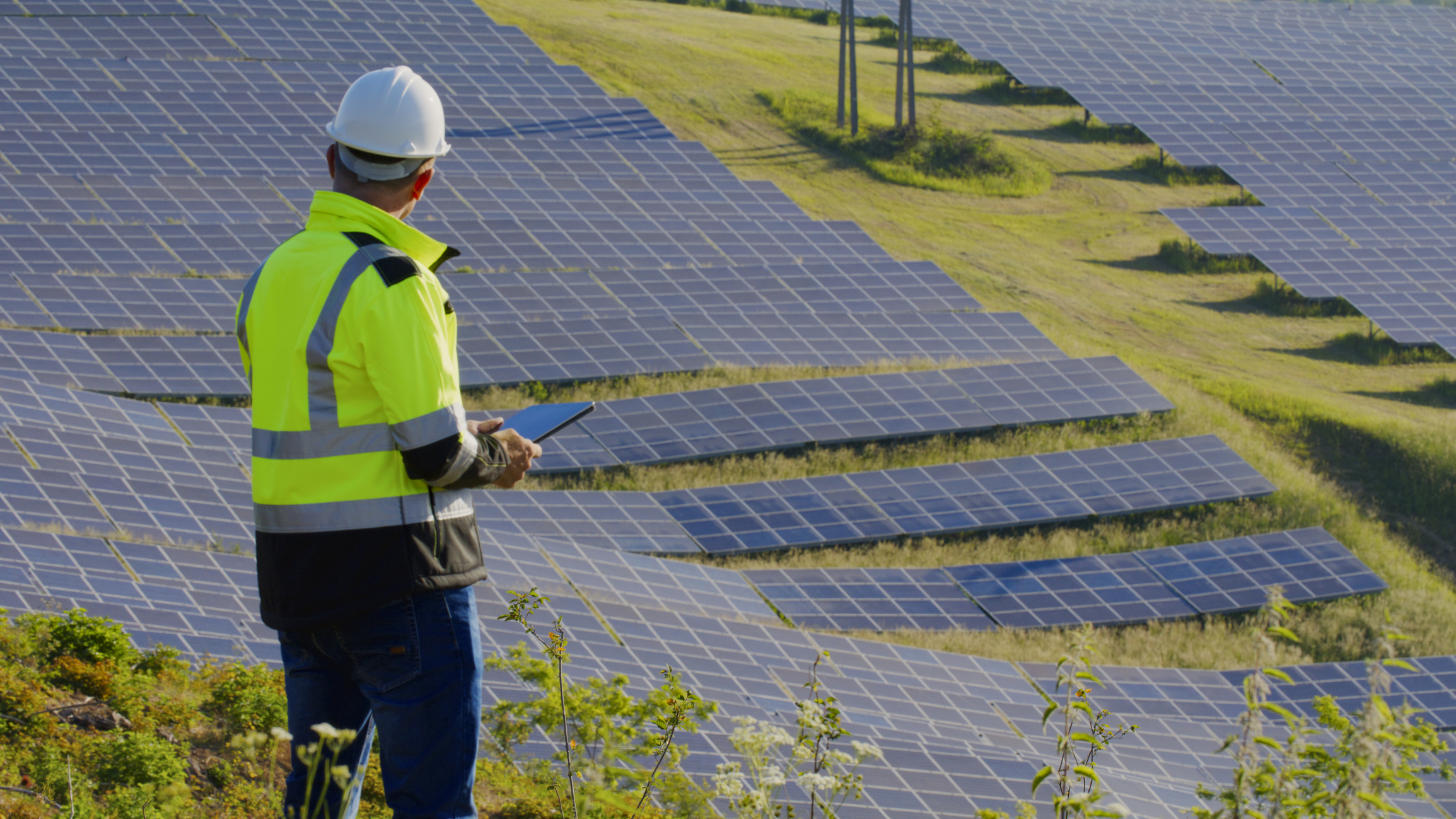
The solar industry is booming. This means the pie is getting bigger for solar Engineering, Procurement, and Construction (EPC) companies, but it also means fierce competition for your business. You need to be at the top of your game to win those solar customers, land more projects, and maintain your competitive edge.
This post is packed with practical solar sales tips to help you close more deals and become a key player in the solar market. We’ll cover everything from fine-tuning your sales process to harnessing the power of new technology.
Understanding the solar market landscape
The solar industry is growing steadily. Precedence Research put the market value of the global solar EPC industry at $221.5 billion in 2022 and projects a 6.06% compound annual growth rate (CAGR) through 2032, reaching a staggering $399 billion.

Residential or rooftop solar EPCs make up a significant portion of that pie, amounting to $117 billion in 2023. Global Market Insights expects this segment to grow to $172 billion by 2032.
It’s clear from Solar Review’s research that customers’ priorities have shifted, too. Today, 35% want to include battery storage with their new solar panel installations, compared to just 21% in 2022. They also want other roof upgrades and EV chargers. An impressive 28% opted for oversized PV installations to prepare for future EV charging.
Despite the positive outlook, the solar industry isn’t without challenges:
- The number of solar EPC companies is skyrocketing, making it harder to stand out and win projects.
- Solar scams are rampant and breed customer distrust of our industry.
- Customers are more knowledgeable about solar energy, and they have higher expectations.
- Navigating the complex maze of regulations and permits across the 18,000 jurisdictions in the U.S. can be time-consuming and costly.
- Local- and state-level legislation, such as anti-door-knocker laws and utility regulations.
- Even after tax credits, going solar is a big investment, and securing financing for solar projects can be difficult.
- The solar market is growing faster than the skilled labor pool can keep up. In 2022, the Solar Jobs Census recorded its highest-ever percentage (44%) of employers claiming they’ve had a “very difficult” time finding qualified candidates for their job openings.
These hurdles make solar sales complex and demand a sharp sales strategy to succeed. In such a competitive environment, having the right solar sales tips in your arsenal can make all the difference.
7 Essential solar sales tips for EPCs
Despite the challenges, the solar industry remains a promising market with plenty of growth opportunities. It all comes down to tackling the sales process and applying good business practices that breed satisfied customers.
To help you on your journey, we compiled seven essential solar sales tips to help your EPC business thrive. These are tried-and-true strategies that can make a real difference in your sales numbers:
- Master the solar sales process.
- Utilize advanced CRM systems for better lead management.
- Embrace digital marketing for brand awareness and lead generation.
- Provide world-class after-sales service.
- Go above and beyond to collect customer feedback and testimonials.
- Leverage technology to streamline surveys, system design, estimates, and proposals.
- Implement a value-based selling approach.
We’ll explore each tip in-depth, providing practical advice and actionable steps you can implement immediately. Get ready to improve your solar sales game!
Tip #1. Master the solar sales process
A solid sales process is like a roadmap to success. According to a study by Harvard Business Review (HBR), companies with a defined sales cycle see an 18% increase in revenue growth.
It doesn’t matter if you install residential solar systems or massive commercial projects. A well-defined process will keep your sales team running like a well-oiled machine.
The question is, how do you formalize your sales process?
HBR offers a few keys to success:
- Clearly define your solar sales process by establishing a clear set of stages and milestones throughout and defining performance metrics for your sales reps (like conversion rates, closing rates, etc.).
- Train your sales team on pipeline management to ensure they know how to organize and prioritize leads, move them through the solar sales funnel, track progress, and identify bottlenecks.
- Have your sales managers spend at least three monthly hours on pipeline management to ensure continuous improvement.
Qualifying solar leads
Part of a well-managed sales process implies qualifying leads to avoid wasting time chasing the wrong potential customer.
Sales-qualified leads (SQLs) are potential buyers who are serious about going solar and have the budget to make it happen. Identifying SQLs requires training your sales representatives to ask the right questions. They must understand prospective customers’ needs, what they’re looking for in a system, and their timeline for installation.
Crafting compelling solar sales pitches
After qualifying leads, it’s time to knock their socks off with a killer sales pitch. Managing your solar sales process involves constantly reviewing and improving your pitch.
A solar sales pitch is more than just talking about solar panels and kilowatts. It’s about the benefits your customers will see in their everyday lives.
Once you have their attention, you can focus on crafting a detailed proposal. SiteCapture can help you create professional proposals faster by ensuring site information is consistent, complete, and accurate.
Tip #2. Utilize advanced CRM systems for better lead management
Building relationships with your customers is vital in the solar industry. You want them to trust you and know you’re not just some fly-by-night operation. A customer relationship management (CRM) system will help you do that.
CRMs are a central hub for all your lead and customer interactions, keeping track of everything from their first inquiry to their latest service call.
Advanced CRM tools let you increase revenue by automating outreach to leads in the different stages of the sales funnel. These automations personalize your communications and make every customer feel like they’re your only customer.
The result?
According to Nucleus Research, most companies that invest in an advanced CRM system report a return of $8.71 for every dollar.
SiteCapture’s field ops management software integrates seamlessly with SalesForce and other popular CRM systems, making managing customer relationships easy and helping you maximize your CRM’s value.
Master your CRM system or hire an expert
CRMs are powerful tools, but they can be complex. Some newer AI-powered tools can do amazing things, like crafting personalized solar sales scripts, automatically transcribing sales calls, and analyzing the conversation for key insights.
But here’s the thing: you need to know what you’re doing to get the most out of these advanced features and realize that 800% ROI. If you and your sales team aren’t tech-savvy, investing in CRM training or hiring someone experienced with these systems might be worth your while.
Tip #3. Embrace digital marketing for brand awareness and lead generation
You know what they say, “A happy customer is the best advertisement.” McKinsey research shows that word-of-mouth marketing drives 20% to 50% of all purchasing decisions. But in today’s digital world, word-of-mouth has gone high-tech.
It’s not just neighbors chatting over the fence anymore.
It’s online reviews, social media posts, and sharing experiences on forums.
To harness the power of word-of-mouth and build brand awareness, you need a strong online presence that broadens your reach and gives your customers a platform to sing your praises.
Social media marketing for solar companies
Social media platforms are a great way to reach your target audience and build brand awareness among prospective clients. They’re like a virtual storefront where you can showcase your work, share customer testimonials, and answer questions.
For example, you can post photos of recent solar installations, share customer success stories, and even run targeted ads to reach people in your area considering solar.
Optimizing your website for solar sales
Your website is your online home base. It’s the first place leads will go to learn more about your company. Ensure it’s user-friendly, easy to navigate, and that it explains your services clearly.
Local search engine optimization (SEO) is also crucial. Local SEO helps people find your website when they search for solar companies in their area.
Tip #4. Provide world-class after-sales service
Closing the deal is just the beginning; focusing on customer satisfaction is the next step. You must provide top-notch after-sales service to build a loyal customer base and get those valuable referrals. Doing so means:
- Going the extra mile to ensure they’re happy with their solar system
- Being responsive to customer questions and concerns
- Addressing any issues promptly
Building a customer-centric after-sales service program
A good after-sales program is all about communication and proactive support. Keep your customers informed about system performance, schedule regular maintenance checks, and be available to answer questions.
SiteCapture can help you manage this. It offers comprehensive field operations features to track service requests, schedule inspections and maintenance visits, and remotely monitor system performance.

It’s like having a 24/7 support team for your customers, ensuring their solar system is always running smoothly.
Tip #5. Go above and beyond to collect customer feedback and testimonials
Want to know how to give more value to your customers? Listen!
Customer feedback is like gold. It helps you identify what you’re doing well and where you need to improve. Plus, those glowing testimonials from happy customers can be a powerful marketing tool.
According to research from Luisa Zhou, 95% of consumers check online reviews before making a purchase, and 49% of people trust those reviews as much as a personal recommendation.
Here are some actionable strategies to get more feedback and testimonials.
Making feedback easy, accessible, and personal
Make it easy for your customers to share their thoughts. Put feedback forms on your website, social media pages, and customer portal. You can even use QR codes that link directly to a feedback form—just slap one on your invoices or brochures.

And remember to personalize the experience. Address customers by name, ask relevant questions about their specific projects, and follow up on their feedback to show you’re listening.
Integrating feedback tools with your CRM
To truly scale up your feedback collection, integrate feedback tools with your CRM system. This integration allows you to automate feedback requests at different stages of the customer journey, like after installation or a service call.
Incentivizing feedback
Let’s be honest: Not everyone likes to leave feedback, and it’s tempting to want to give your customers a little nudge to share their thoughts. However, this can sometimes backfire, leading to false or biased reviews that are easy to detect and hurting your brand image.

For example, according to the Content Marketing Institute, users trust companies with an average of 4.2 to 4.7 points out of 5 more than companies with perfect review scores.
Tip #6. Leverage technology to streamline surveys, system design, estimates, and proposal
Technology can help you work smarter and more efficiently, leading to a better customer experience for your clients. Many software solutions can streamline your sales process from initial site surveys to proposal generation.
Utilizing field survey and sales software
Field survey and sales software can be a game-changer for EPCs. Instead of scribbling notes on a notepad and hoping you don’t lose them, you can use a mobile app to capture all the necessary data on-site. This information is then instantly shared with the team back at the office through the cloud.
SiteCapture, the #1 field ops management software, allows your field technicians to easily collect all the information they need for site surveys, inspections, estimates, and more.

Integrating with other solar software
Look for solutions that integrate with your other tools, like your solar CRM system and design software. SiteCapture integrates with popular solar design software like Aurora Solar, allowing you to seamlessly transfer data and create accurate 3D models of your proposed solar systems.

These integrations streamline your workflow and help you create professional proposals that impress your clients.
Tip #7. Implement a value-based selling approach
Don’t just sell solar panels. Sell the value of renewable energy. What problems are you solving for the customer, and what are the long-term benefits?
Are you helping business owners save on energy costs? Are you assisting residential customers to reduce their carbon footprint? Are you giving them energy independence?
Focusing on the return on investment your service provides makes you stand out from the competition and allows you to justify higher prices.
Highlighting the benefits of solar energy
When it comes to selling solar energy, forget about pushing panels and start talking about the value they bring. Solar energy has a powerful story to tell—it saves people money, is good for the environment, and helps reduce our reliance on fossil fuels. These are big selling points that resonate with today’s customers.
But don’t just tell your customers about these benefits. Show how they translate into real-world value.
For example, use relatable examples and simple calculations to illustrate how much they could save on their energy bills over the system’s lifetime. Ready a demonstration to show how much carbon they’ll no longer pour into the atmosphere each year.
Illustrations like these help bring the idea of solar into tangible focus for customers and help your sales team close the deal.
Time to fire up your sales engine!
The above solar sales tips will help your company dominate the market, but only if you implement them now. Remember, it’s all about:
- Building relationships with potential customers who fit your ideal customer profile or buyer persona
- Owning and managing your sales pipeline effectively
- Leveraging technology to streamline your operations
- Providing value to your clients
The key is adapting these strategies to your specific needs and refining your sales process as you go along. With some hard work and the right tools, you can turn your EPC company into a solar revenue powerhouse.
Check out SiteCapture to see how it can help you increase sales and grow your business. Click here to learn more about SiteCapture for field operations.